| From Strugglingteens.com Visit Reports Bend, OR We arrived on the campus of Academy at Sisters in Bend, Oregon on a warm, summer afternoon in June. Having given very little announcement of our pending visit, we found that many of the girls were off campus at the time, however we were able to meet with two young ladies in the upper levels of the program, observe several ladies in Phase II, and briefly talk with one young lady who was just transitioning into Phase II on the day of our visit. Chesley Strowd and Denise Kelly-Simpson, both in Admissions, met us upon arrival for a brief overview of the Academy. Academy At Sisters is a therapeutic boarding school for girls ages 14-17 at admission, though many choose to stay when they turn 18. Typically, some have run away, chosen poor peer relationships, have poor boundaries, academic decline, are truant, have drug and alcohol issues, continually put themselves in dangerous situations, and are beyond parental control. Often, students are diagnosed with ADD/ADHD, depression, anxiety, PTSD and are struggling with issues related to adoption, oppositional defiance, promiscuity, inappropriate computer use, shoplifting, etc.
One thing that stood out to me in this meeting was the amount of staff meetings that occur at the Academy. Daily, staff communicates with each other to offer a complete team approach for each girl. Everyone knows what's happing with each girl so there is no room for manipulation or miscommunication. After a little while we met with Dr. Julie Schneider, Licensed Psychologist and Clinical Director of the program. Julie explained the therapeutic component of Academy at Sisters. Therapy at the Academy is based on a cognitive behavioral model where pro-social skill development occurs through positive reinforcement, and accountability. They believe that thinking, emotions and behavior are all related, so negative thinking brings about negative emotions which bring about negative behaviors. At the Academy, girls learn how to evaluate their thinking and self-talk and find appropriate, positive ways in which to deal with situations in addition to attending DBT groups for specific skills in these areas. Because everyone is so intimately connected to each other, everyone (staff, parents, students, etc.) constantly monitors and contributes to the positive change in behavior of all the girls. Academy at Sisters also realizes the student isn't the only part of the family problems. Julie explained the parent component where parents are provided a set number of parent coaching sessions to help them grow and become the parents their daughter's need them to be. Parents also participate in weekly calls, visitations, traditional and equine family therapy sessions upon request, and quarterly there are parent workshops to attend. After our discussion with Julie, Rick Buening Academic Director came in to explain the Academic component. He had probably the most impressive part of the program to discuss with us. A unique and invigorating part of Academy at Sisters is their one-room school house philosophy. All the girls work together through a proficiency-based academic model that has proven effective at helping students discover who they are as learners. Each girl's assignments in a particular class are tailored to her level of academic skill; however her class project is the same as the other girls with opportunities to utilize her unique skills and talents to show proficiency (i.e. photography, art, acting, research, etc.). There are many experiential learning opportunities both on and off-campus along with community service learning projects (i.e. Habitat for Humanity). Each girl creates a portfolio of her projects which she later presents to a panel consisting of teachers, students she invites, Academic Director, her parents, Treatment Coordinator, home therapist, Educational Consultant or other community members. They will also Skype in any members who are unable to attend! During this process, she must present the evidence from her portfolio explaining why she feels she earned the grade she's proposing. There is a discussion with the panel members and student which leads to the grade issued based on Oregon standards. Later the students have the opportunity to attend the local high school to practice the skills they've learned in a more realistic setting while receiving the continued support of the Academy. Girls go to school year-round with trips and short breaks in between their school sessions. As they near the upper levels of the program, they are also able to apply for and obtain jobs and attend college courses. Equestrian therapy is also an option and girls participate in community service projects. The girls participate in many recreational activities as well. After we met with the staff, two girls came in to sit and talk with us about the program. We asked the girls to take us on a tour of the facility, which they gladly did. We were impressed with their openness to share as they walked us around the campus.
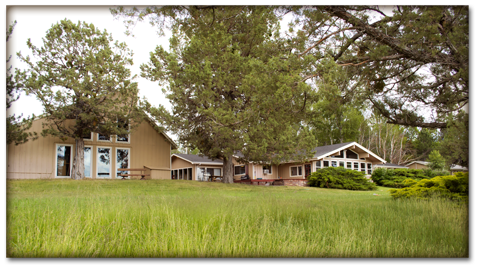
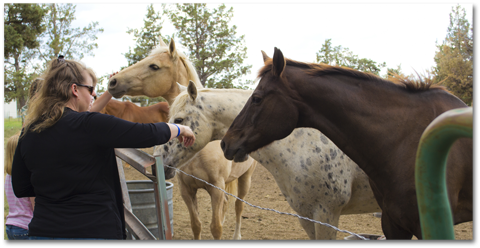
We left the admissions office and walked into the main front door of the lodge. I felt as though we'd walked into a large garden as we entered the house. There were plush house plants enveloping the entry, which then opened up into a large lounge called the "Great Room". From the Great Room we traveled down a hallway to the Phase I rooms. I stopped a few minutes in one of them as I noticed a girl packing up her things to move. I learned that she had just successfully completed Phase I and was moving to Phase II in another part of the house. She was excited and eager to get moved. As we left this area, we walked through the lounge and into the large kitchen/ dining area. There were large tables where the girls eat family style as one big family. During their stay, the girls have opportunities to do things as a group (activities, meals, recreation, volunteering) as well as plan their own activities and volunteer opportunities as they gain more independence and responsibility. We stayed and watched a Phase II group sitting at their table going over community discussions and planning before we headed toward the academic building. Because school was out for activity, the school house was locked and I could view it from the large wall of windows. The school is a large one-room school house setting where all the students attend class together. The large open room consisted of tables and chairs, and computers lined the outer walls. We next toured the cabin for Phase II students. Rooms are tidy but definitely left to the girls to keep cleaned. Each area was personalized with knickknacks from home and appropriate pictures and motivational posters. After we left this cabin, we walked out and met the horses with the girls.
I was impressed with the way the girls candidly talked about themselves and some of the things they struggle with, not only issues that led to their placement in a therapeutic school, but also the issues they still struggle with although they were in upper levels of the program. I hadn't asked the girls the typical consultant questions, but they felt comfortable enough with me and their program, and confident enough in themselves, that they openly shared with us. Our last stop on campus was Phase III & IV. At this phase of Action/Maintenance in the model of change, the students practice their skills in more realistic settings as they go on home visits, attend the local high school if appropriate, volunteer at a place of their choice, or play high school sports. They have more independence, and may possibly earn the privilege of having a cell phone, holding a job, attending a local high school and/or attending college courses. Basically, the students at this point are in the transition phase of the Academy and depending on their age, may be working toward returning home, or to a traditional boarding school or joining the Pathways program. If the student is 18 and has graduated the program, she may have the opportunity to be in Pathways where she is working on transitioning into full independence. After touring the campus with the girls, we returned to the Admissions Department and said our goodbyes. We had had a good visit and although many girls were off campus on activity, we were able to get a good picture of the program. We were impressed with the academic component as well as with the girls we met. © Copyright 2012 by Woodbury Reports, Inc. |